Is forex trading legal in the Philippines? The practical answer depends on the product, the company behind it and what the person is doing.
Exchanging money, trading a leveraged CFD, promoting a broker and collecting other people’s money are not the same activity.
Philippine authorities can treat them differently.
For a resident considering online forex, the safest starting point is not “the website opens, so it must be allowed.”
Identify the transaction, the contracting entity and any Philippine SEC action before money moves.
The Short Legal Answer for Forex Trading in the Philippines
The Philippine SEC has taken a restrictive position toward public offers of leveraged foreign-currency contracts, CFDs and similar derivatives.
Its advisories state that registration for these products and their merchants or brokers remains suspended.
The agency has also warned against entities soliciting investments without the required registration or licence.
That position makes an offshore platform’s availability very different from Philippine authorisation.
“Regulated overseas” does not answer whether the company may offer the product to the Philippine public.
A person trading only for their own account is different from a promoter selling investments or a manager controlling client funds.
It would still be unsafe to label every own-account situation “legal” without reviewing the product, funding route and current orders.
This guide provides a decision map, not individual legal advice.
| Question | Practical answer |
|---|---|
| Can the site be opened in the Philippines? | Access alone does not prove local approval. |
| Does an overseas licence settle the Philippine issue? | No. It may describe foreign supervision, not permission to solicit locally. |
| Is using personal money identical to recruiting investors? | No. The conduct and legal issues differ. |
| Is a categorical yes or no safe? | No. Check the product, conduct, entity and latest SEC status. |
A Legal Map Based on What the Person Is Doing
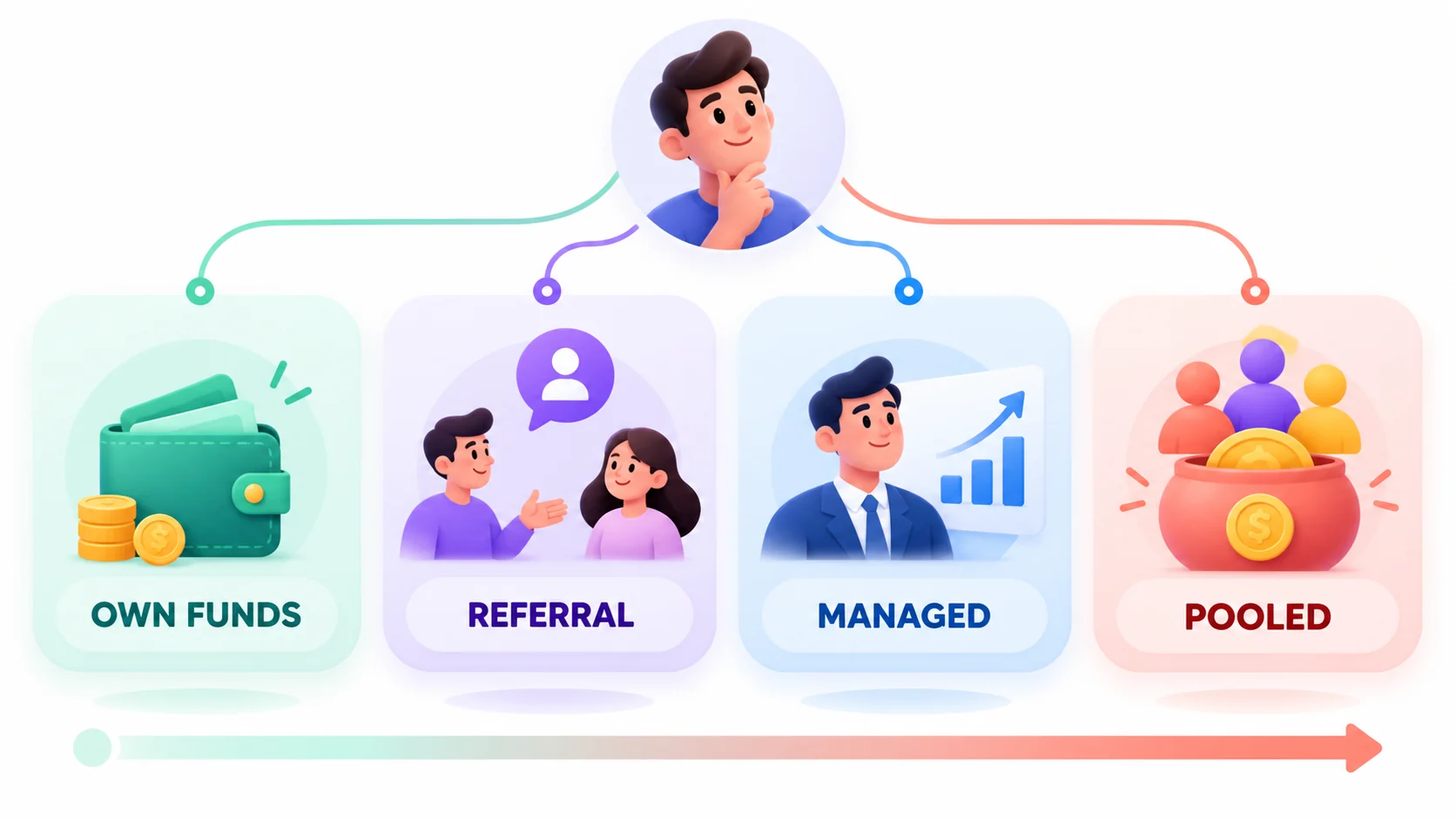
Trading With Personal Funds
An adult placing orders with money they own is not performing the same role as the broker offering the contract.
The trader is the customer; the broker or contracting entity provides the product and holds the account.
That distinction does not turn the account into an approved Philippine investment.
The resident may still face an unregistered product, an SEC advisory, weak complaint rights or an unavailable payment route.
Before trading, retain the client agreement, entity name, licence entry, deposit receipt and the SEC search results used on that date.
Posting Referral Links or Recruiting Clients
A referral arrangement adds conduct that personal trading does not have: advertising, recommending a product and receiving value when another person registers or deposits.
Philippine SEC advisories warn that people who promote, recruit or invite others into an unauthorised investment scheme may face liability.
A social-media disclosure such as “not financial advice” does not determine whether the conduct is solicitation.
An affiliate should obtain Philippine legal review of the entity, product, audience, compensation and copy before publishing a link.
A foreign broker’s marketing permission is not a substitute for that review.
Managing Another Person’s Account
Using a friend’s password or deciding trades for another person introduces authority over someone else’s property.
Payment, discretion and the way the service was advertised can all change the analysis.
Password sharing can conflict with platform terms, and identity checks can fail.
A withdrawal dispute may then leave neither person with a clean ownership record.
Do not accept credentials or trade another person’s funds based on informal consent. A Philippine lawyer should assess the proposed service before any access is granted.
Pooling Money or Promising Returns
Collecting money from several people and promising a return is different from teaching someone how an order ticket works.
The arrangement may involve an investment contract, unregistered securities, solicitation or intermediary activity.
Guaranteed monthly profit, capital protection and recruitment rewards are strong stop signals.
Do not send money to a personal bank or wallet for group forex trading.
If a scheme is collecting funds, preserve messages, receipts, names, domains and wallet addresses before responding.
Which Philippine Authority Covers Each Part of Forex Activity
SEC and Securities Activity
The SEC is the primary checkpoint for the offer and sale of securities, broker or dealer activity, investment solicitation and enforcement measures within its mandate.
Sections 8 and 28 of the Securities Regulation Code address securities and intermediary registration.
Applying those provisions to a forex arrangement requires the facts, not just the brand name.
SEC company registration does not prove that an entity holds the secondary licence needed for a regulated investment activity.
Check both the company and the permission claimed.
BSP and Foreign Exchange or Payment Services
The BSP’s foreign-exchange framework covers bank FX transactions, foreign investments, borrowings and documentary requirements.
It also supervises categories of banks, money-service businesses and payment providers.
A BSP-supervised bank processing a card or remittance does not approve the offshore CFD at the other end.
“Foreign exchange” in a BSP document does not automatically mean retail leveraged trading.
Use the BSP foreign-exchange regulations page to identify payment and currency rules, then use SEC records for the product-offering question.
BIR and Tax Records
The BIR issue is recordkeeping and tax treatment, not permission to offer a trading product.
Tax reporting can still arise when a provider is offshore or a transaction is disputed.
BIR Revenue Memorandum Circular No. 12-2024 discusses converting foreign-currency transactions into Philippine pesos.
It also addresses realised foreign-exchange differences, but supplies no universal rate or classification for every retail account.
Keep the original currency amount, transaction date, peso conversion source, fees and settlement record.
A CPA should classify the actual income and apply the rules to the trader’s circumstances.
How an Offshore Broker Changes the Legal and Practical Position
A Foreign Licence Is Not Philippine Authorisation
An overseas regulator may supervise a specific legal entity under its own law.
That evidence can be useful, but it does not grant a Philippine licence.
Do not copy a licence number from a group homepage and assume it covers the account.
Match the register’s legal name and domain to the entity in the client agreement.
The Contracting Entity Decides the Agreement and Complaint Route
Global broker groups may route customers to different companies.
The entity in the opening terms normally determines the governing law, complaint procedure and regulator contact.
If the licence and account belong to different group companies, the named protections may not follow the customer.
Save the accepted agreement and its version date.
Access From the Philippines Does Not Prove Local Approval
A website, app and PHP payment button can remain available when a provider lacks permission to solicit Philippine residents.
They may also remain visible after the provider becomes the subject of an enforcement action.
Treat technical availability as a usability fact only. Philippine status requires a separate SEC search using the company, brand, domains and significant variants of the name.
Reading a Philippine SEC Advisory Without Overstating It
Match the Named Company, Brand, Domain and Conduct
Record the legal entity, trading name, website, social account, app and people named in the document.
A similar spelling is a lead to investigate, not proof that two businesses are identical.
Identify the conduct: offering unregistered securities, acting without a licence, recruiting or taking deposits.
This prevents a broad headline from replacing the operative text.
Separate an Advisory From a Cease-and-Desist Order
An advisory warns the public and explains the regulator’s concerns.
A cease-and-desist order formally directs named respondents to stop specified conduct.
Both matter, but they should be labelled accurately. Do not report that a business was “banned” or “convicted” merely because an advisory exists.
Check for Later Orders, Appeals or Lifting Decisions
Search the SEC’s advisories, issuances and press releases for the same entity after the document date. Look for a later order, amendment, clarification, appeal or lifting decision.
If no later document is found, say exactly that and provide the search date. Absence from search results is not proof that no proceeding exists.
Five Common Forex Scenarios in the Philippines
A Person Trading Only Their Own Money
Mia funds an account in her own name and decides every trade herself.
Her legal questions concern the provider and payment route; she is not recruiting or handling client funds.
Her action is still not evidence that the platform is locally authorised. She should avoid depositing until the entity and current SEC position are clear.
An Influencer Paid for Broker Referrals
Paolo posts tutorials and receives a fee for funded accounts. His role now includes compensated promotion and possible solicitation, even if he never touches follower funds.
He needs legal review of the broker’s Philippine status and his marketing conduct. A risk disclosure does not cure an unauthorised offer.
A Trader Using a Friend’s Login
Carlo trades through a friend’s account because the friend wants “help.”
This creates authority, security, terms-of-use and ownership issues.
The safe response is to stop using the credentials and obtain professional advice before any further instruction or withdrawal.
A Group Collecting Money for Copy Trading
A chat group sends deposits to one organiser, who promises to double the pool with a forex bot.
The pooled funds, return promise and recruitment raise far more serious issues than chart discussion.
Participants should not add money or pay a release fee. Preserve the promotion and transfer evidence, then contact the appropriate authority and independent counsel.
A User Trying to Recover Funds After an SEC Action
Lea finds an SEC document naming her provider after she has deposited. The priority is evidence and controlled communication, not a rushed extra payment.
She should save the agreement, statement, withdrawal attempt, correspondence and bank trail.
She can then ask for the formal complaint route and obtain advice on reporting and recovery options.
Taxes, Records and Professional Advice
Records a Philippine Trader Should Retain
- Account application, KYC confirmation and accepted client agreement
- Contracting entity, registered address, licence result and checked date
- Deposits and withdrawals with processor and bank references
- Complete trade history, financing, commissions and conversion charges
- Original-currency amounts and the documented PHP conversion method
- Support tickets, material marketing claims and any SEC document
Export records while the account is accessible. Screenshots are helpful, but native statements and bank records are easier to trace than cropped images alone.
When a Lawyer or CPA Is Needed
Consult a Philippine lawyer before promoting a broker, managing another account or pooling funds.
Legal advice is also prudent before forming a trading business or responding to an SEC measure.
Consult a CPA when money is earned, lost, converted, carried across tax periods or received as affiliate compensation.
Legal permission and tax treatment are separate questions, so one adviser may not replace the other.
Forex Legality FAQs in the Philippines
Can a Filipino be arrested simply for trading forex online?
No reliable blanket answer should be given from the word “trading” alone.
SEC materials focus on unauthorised offers, solicitation and intermediary activity, but liability depends on the facts.
A person worried about an account, investigation or complaint should obtain Philippine legal advice promptly.
Does a BSP licence cover an offshore CFD broker?
No. Identify the exact BSP-licensed entity and its permitted payment or foreign-exchange activity.
Payment supervision should not be presented as SEC authorisation for an offshore CFD offer.
Does an overseas regulator make a broker legal in the Philippines?
No. A foreign licence may show that a named company is supervised in that regulator’s jurisdiction.
It does not establish Philippine authorisation for the company or product.
Forex Trading Legality in the Philippines Summary
The answer to “is forex trading legal in the Philippines?” begins with the product and the person’s conduct.
The contracting entity and latest Philippine regulatory status matter just as much.
The SEC takes a restrictive position on public offers of leveraged foreign-currency contracts and CFDs.
An accessible offshore platform is not automatically authorised. Foreign regulation and local permission are separate.
Trading personal funds is not the same act as recruiting clients, controlling another account or pooling money.
It still carries regulatory, contract, recovery and tax-record risks.
Classify the activity, retain the evidence and obtain a Philippine lawyer or CPA when the facts become more complex.
Regulatory sources in this article were checked on 15 September 2026. This general information does not replace advice on an individual case.
Leave a Reply